

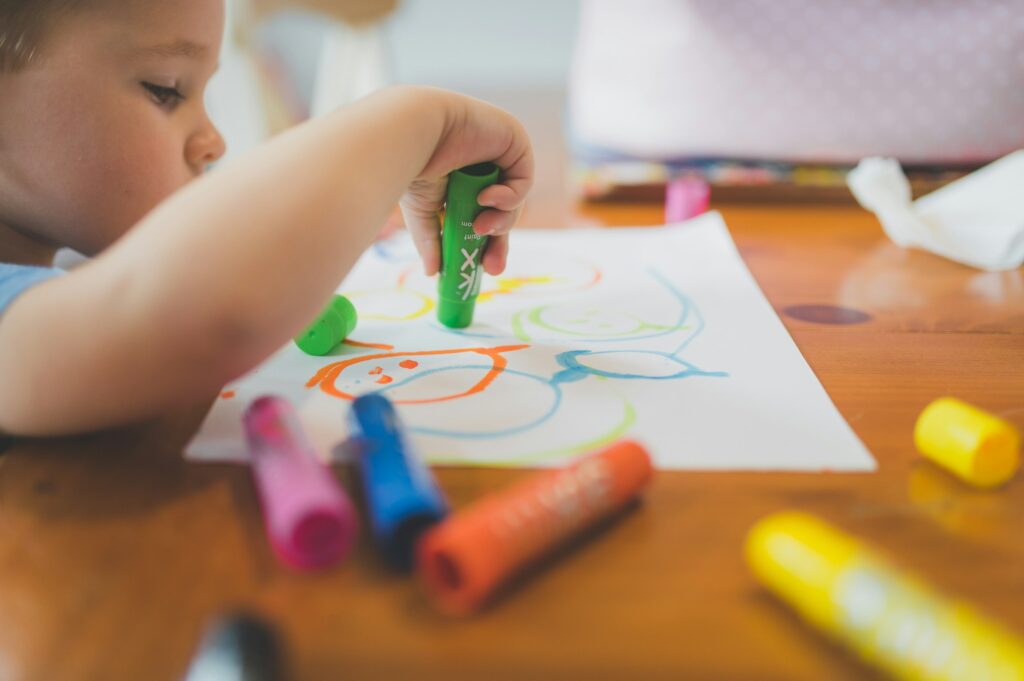
When a toddler picks up a crayon, it can look like simple scribble. In early childhood development, those scribbles are an important part of learning to move, think and communicate.
Scribbles are an early stage of writing
Early years specialists describe scribbling as one of the first stages of learning to write and draw, usually appearing between around 15 months and 3 years. Repeated chances to play with crayons and other art materials help toddlers progress from random marks to more controlled lines and shapes over time.
For toddlers, coloring is not about staying in the lines. It is about exploring cause and effect (“when I move my hand, the mark moves”), watching colors appear on the page, and practising how to control small movements in a fun, low-pressure way.
Building fine motor skills and early handwriting foundations
Many everyday tasks rely on fine motor skills: the small muscle movements in the hands and fingers used for buttoning clothes, feeding with a spoon and eventually holding a pencil. Early childhood organisations highlight activities like drawing, coloring and using crayons as helpful ways to strengthen these muscles and improve hand–eye coordination.
When toddlers grasp and move crayons, they practise:
- Pinching and gripping with their fingers
- Stabilising the paper with the other hand
- Coordinating what they see with how they move
These early experiences lay groundwork for later writing and more precise hand control. Research on fine motor development suggests that stronger early fine motor skills are linked with better later academic outcomes and fewer behavioural difficulties, underlining the value of giving young children plenty of chance to practise these movements.
Supporting thinking, language and early concepts
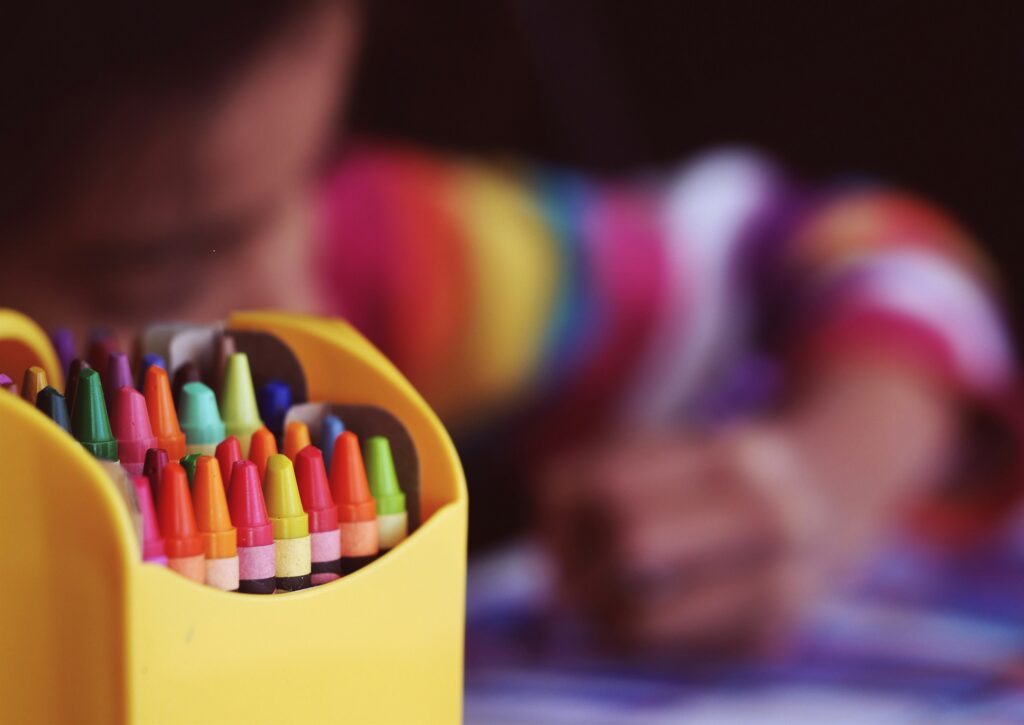
Coloring and drawing also connect with how toddlers think and learn about the world. Early childhood sources note that simple art activities can help children understand basic ideas such as colors, shapes, size, position and patterns.
As adults talk with toddlers about what they are coloring (“You chose the red crayon”, “That circle looks like a ball”), children hear and practise new words. Articles on drawing in the early years describe how these back-and-forth conversations during art can support vocabulary and early language development.
Even very simple mark-making gives toddlers chances to make choices (“which color?”, “where on the page?”), solve small problems (“how do I reach that corner?”) and stay focused on a short, meaningful task.
Emotional expression and self-confidence
Art and coloring offer young children a safe way to express feelings and experiences they may not yet be able to put into words. Early childhood practitioners point out that drawing and painting can help children process emotions and build emotional understanding.
Because there is no “right answer” in toddler coloring, it can also be a gentle way to build confidence. When an adult notices and names what the child has done (“You filled the whole page with blue”, “You drew lots of big circles”), toddlers receive specific, positive feedback about their effort and ideas, rather than about staying neat or inside the lines.
Calm, repetitive movements like coloring can be soothing for some children, and several early years resources describe coloring and similar art activities as helpful for supporting relaxation and patience in young children.
Strengthening family connection and providing screen-free time
Professional bodies in early childhood emphasise the value of simple, shared play for building secure relationships. Sitting together with a few crayons and a coloring book naturally creates small moments for talking, listening and making eye contact.
Coloring is also practical. It needs minimal equipment, can be used at home, on journeys or while waiting, and offers a straightforward alternative when families are looking to reduce screen time.
Practical tips for coloring with toddlers
Evidence-based guidance from early childhood organisations suggests a few simple principles for art activities in the early years:
- Offer chunky crayons or washable markers that are easy for small hands to grip.
- Provide simple pictures with big shapes and plenty of open space, or just blank paper for free scribbling.
- Focus on the process, not the result. Talk about colors, shapes and movements rather than neatness.
- Keep sessions short and relaxed, following your toddler’s attention span.
- Let toddlers experiment. It is normal if they switch colors often, scribble over the whole page or hold the crayon in an unconventional way at first.
Coloring is only one part of a toddler’s play diet, but it brings together movement, thinking, language and relationships in a compact activity that fits easily into everyday life. With a few crayons, some paper and time beside a caring adult, toddlers can enjoy simple coloring moments that support many areas of early development.